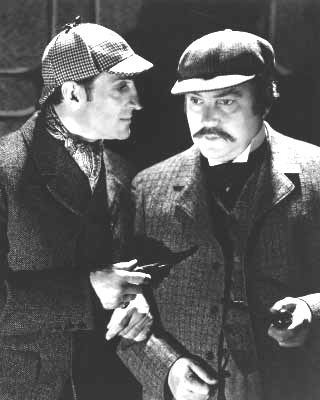
The Hound of the Baskervilles
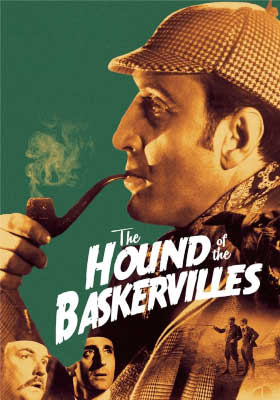
Director: Sidney Lanfield
Year: 1939
Rating: 7.5
One of the nice
things to know about the Basil Rathbone/Nigel Bruce Sherlock Holmes film
series is that the two of them were the best of friends in real life. They
were both part of that large British ex-pat community in Hollywood and were
both big party givers and goers. Bruce's children called Rathbone, uncle.
Both had also served heroically in WW I; Rathbone in military intelligence
and Bruce on the front line. Like his character Watson in Afghanistan, Bruce
was badly wounded in the leg. It was that friendship that brought them together
in the series.
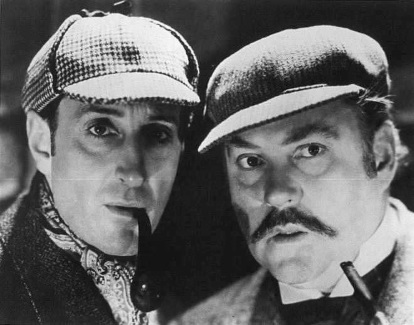
The story is that Darryl Zanuck, the head
of Fox, was at a cocktail party when someone suggested that they should produce
a Sherlock Holmes film. Of course, there had already been a number of Holmes
films going back to the silent era. Best known were the five Arthur Wontner
Holmes films, the last of which was Murder at the Baskervilles in 1937. Did
they really need another Holmes film so soon? And who Zanuck asked should
play Holmes. How about Rathbone.
Best known at the time for his villainous
roles in A Tale of Two Cities, The Adventures of Robin Hood and Captain Blood,
Rathbone had the high forehead and sharp profile that we have come to expect
of Holmes. And as for Watson? My good friend Nigel Bruce, he suggested. He
telegraphed Bruce to come to Hollywood. We are going to have some fun. And
they did for fourteen films and many radio shows. At the time, Bruce had
been finding work difficult and to some large degree he was typecast as the
older bumbling Englishman (though younger than Rathbone by two years).
In this first film, they are not even top billed - that goes to Richard Greene,
then Rathbone, Wendy Barrie and finally Bruce. The Hound must have been the
obvious choice as it was the most famous of the Doyle stories and one of
the few novels as opposed to short stories. It turned out to be the only
one of the films that stayed close to a Doyle/Holmes story.
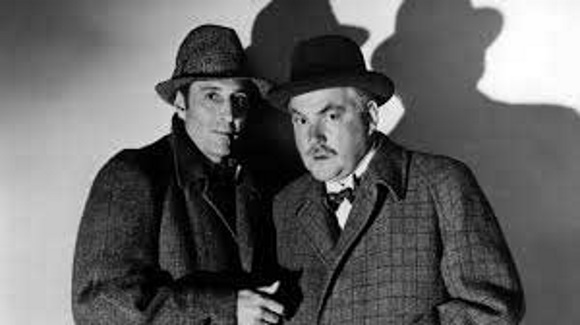
Their very first scene together in their
shared apartment at 221B Baker Street sets up their relationship for the
entire series. Sitting comfortably reading the papers, Mrs. Hudson enters
to tell them that a man had been by to see Holmes earlier but had to leave
and had forgotten his walking stick. Holmes asks Watson what he can tell
about the man from the stick. Watson of course gets much wrong, Holmes mocks
him, tells him what he missed, Watson is incredulous till Holmes is proven
correct and it immediately establishes Holmes as the dominant figure of the
two. The Type A and Watson the Type B. Their relationship has always felt
uneasy, an unlikely combination of two grown men living together but it has
almost always been portrayed this way in films. A symbiotic relationship
that worked. Why one wonders is Watson portrayed as a bit of a dunderhead.
He was a doctor, he was in the Afghan wars and he wrote the damn stories.
Hardly a slow-witted person. I wonder if it was having Bruce in the role
that pushed them in that direction. Or vice-versa. But he is always loyal,
honorable and there for Holmes. And much loved by the audience for his humanity.
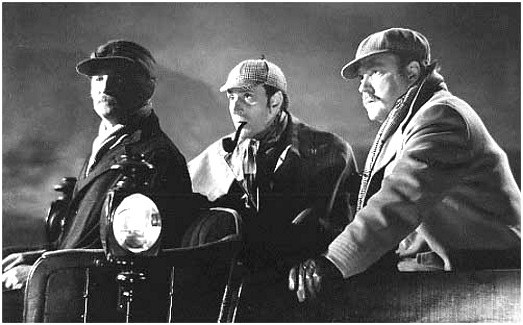
The 1959 Peter Cushing Hound is considered
by most as the best version of the story, but this one is pretty good. I
like how they created the moors and the mansion on their sets. The moors
were probably the size of a stage, but they look much bigger. The terrifying
Grimpen Mire. The fog machines were about the most expensive aspect of the
film as they were continuously chugging away. The main change to the book
and I think detrimental to the film is the romance. No such thing in the
book and the 1959 version has a very different take on it. But with Greene
as the lead, it was expected that there was a romance with the half-sister
(Wendy Barrie) of one of the suspects. In the book, she is secretly married
to the suspect. Nice having Lionel Atwell and John Carradine as suspects
as well.
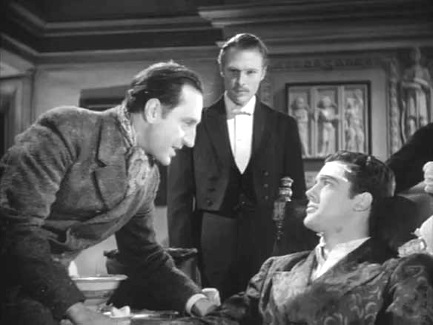
The film at 80-minutes is well-paced with
Watson getting more screen time than the disappearing Holmes, well shot by
director Sidney Lanfield, best known for his light comedies with a few great
close-ups and two iconic figures were created. And Rathbone gets to have
fun in one of his many disguises through the series. All these years later,
there is a great deal of affection for them. The film was a hit and Fox signed
them up for one more film - both set in Victorian England - but that was
the end of it for Fox. Their negotiations with the Doyle estate fell through
and Rathbone and Bruce were looking for work again.
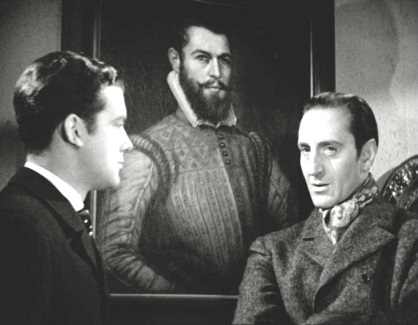
Fortunately, Universal swooped in and made
a deal with the estate and they brought the two friends back though three
years later. From 1942 to 1946 they made twelve Holmes films. But because
of WWII and the cost for period films, they were set in the present with
smaller budgets than the Fox films. They became B films. But still you could
count on Holmes and his perplexed sidekick fighting crime and Nazis and always
facing death with British upper-lip valor. The final line of dialogue is
Holmes ordering Watson to bring the needle - meaning cocaine - but that was
edited out of original version when released but put back years later. It
is a great ending to the film, again showing the unequal dynamic between
the two.