Too Many Ways To Be Number
1
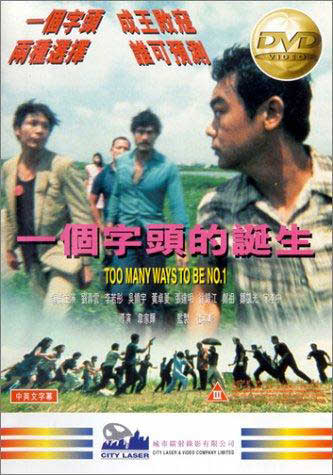
Director: Wai Fa-fai
Year: 1997
Rating: 8.0
This film from Milkyway
Productions and directed by Wai Ka-fai is certainly one of the most innovative
and intriguing films to come out of HK in the 90’s, but it is certainly not
the easiest film to watch. In too many ways it is style over substance, film
technique over story telling. Yet it is certainly a film that will either
capture your attention or repulse you.
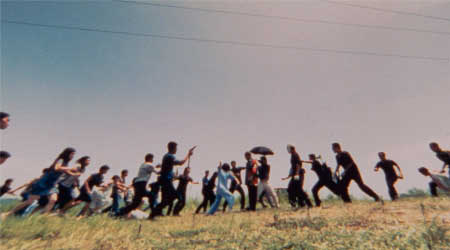
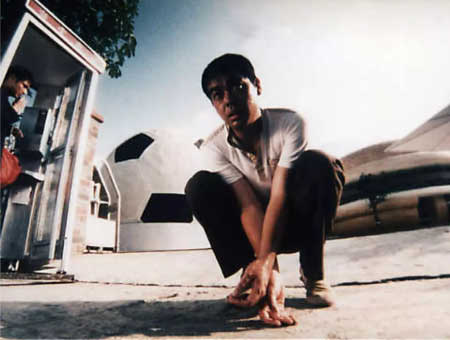
Camera movement dominates this film unlike
any I have ever seen. It often feels that the characters and story are there
only for the camera to play with. Primarily using a hand held camera, Wai
has it constantly on the move – swooping in for a close up, circling overhead,
frantically swinging back and forth, filming from an low oblique angle or
set far back for a wide angle shot. One entire fight scene is shot (twice)
with the camera upside down. Much of the film is distorted or bathed in hues
of green or blue. There are only a few short scenes in the entire film with
a static camera in normal distance mode. Much of this is initially very irritating
and disorienting to the viewer. As is the story.
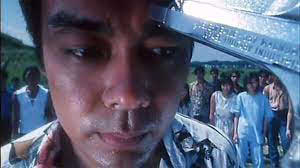
Lau Ching-wan is a small time and not particularly
bright triad lowlife. His life has reached a point where it seems to be trapped
in an endless loop within a decision tree. The film follows different versions
of his life depending on what decision he makes, but due to the ineptitude
of Lau and his gang or perhaps to fate, the results are always peculiar to
say the least. And very violent. Fingers
being cut off, people run over, a woman dying from an orgasm, bricks being
cracked on top of heads, lots of people being shot or drowned or knifed.
At first it is all too much and then suddenly you realize that this is a
comedy – a very dark comedy – but a comedy nevertheless. And the camera angles
and movement are all part of the joke and you start noticing a lot of visual
gags and the absurdity of the whole thing. And by the time you reach the
episode of the two fat triad kingpin brothers in Taiwan who have both unwittingly
hired Lau and his colleague Francis Ng to kill the other brother, the film
has reached a sublime level of sly satire and incisive cleverness. And it
goes on forever – because every decision creates a new path and every path
a new story. The film though goes on for only ninety minutes – ending just
as another story begins.
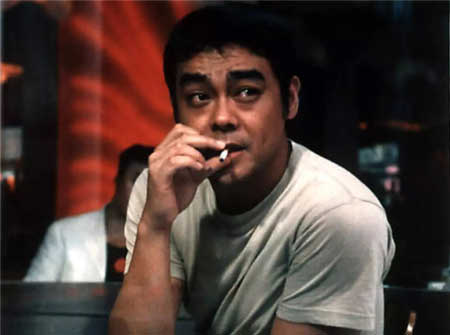
Lau Ching-wan is as usual excellent here –
portraying this befuddled yet honorable fellow who keeps finding himself
in over his head. Both Ng and Carmen Lee are fine in supporting roles and
Ruby Wong has a small but amazing few minutes of screen time.
As a complete aside - if you enjoyed this film you might want to check out
a German film called Run Lola Run that has a similar theme and is also a
terrific film.