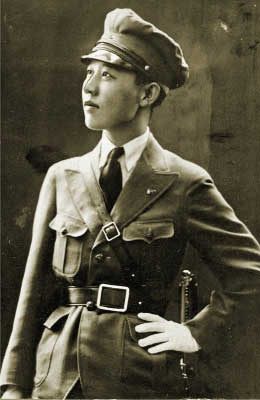
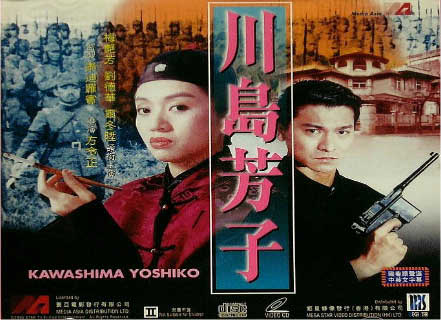
Kawashima Yoshiko
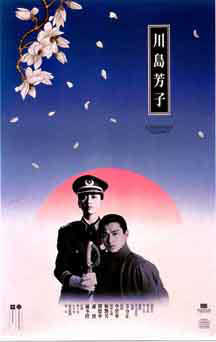
Reviewed by YTSL
The makers of this movie seemed to have aspired
for it to be much more than the flawed (minor) piece that it is. Even
in the form in which I saw it, there was a lushness to the cinematography
(of Jingle Ma, who was nominated for a Hong Kong movie award for this film),
a lavishness to the costuming, obvious thoughtfulness with regards to choices
of locations, and an attempted sense of weightiness that managed to come
through in a few scenes that are evidence for this.
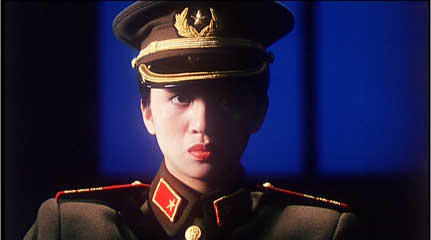
Some of the opening scenes (including one featuring the protagonist going
out riding in appropriate English-style garb with the person whom she eventually
hopes to marry) looks to presage "The Soong Sisters". At one point,
the story of KAWASHIMA YOSHIKO (a.k.a. THE LAST PRINCESS OF MANCHURIA) intersects
with "The Last Emperor" of China (and, consequently, Bertolucci's film of
that name). However, neither of those historical epic-type productions
feature as many sex scenes and the kind of kinetic fight sequence that would
not have been at all out of place in a martial arts movie as this biopic.
And perhaps it was inadvertent, but it was difficult for this Hong Kong movie
fan to view a Hong Kong period film which features a woman cross-dressing,
scenes of her viewing Chinese Opera, and torture that involves whipping and
water without thinking of (the major classic work that is) "Peking Opera
Blues". Amidst all this, I (still) found it difficult to see this particular
piece -- as Tony Rayns has done -- as "a wonderfully subversive rereading
of China's modern history" (See Fredric Dannen and Barry Long's "Hong Kong
Babylon", 1997:390).
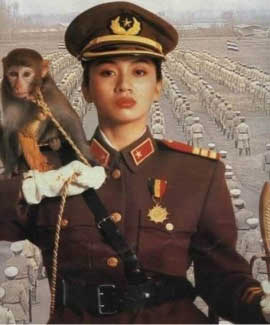
On the whole, I can't help but feel that this
production focused too much on one person -- a Manchu princess who was sent
to Japan at a young age to be trained to eventually return to China to act
as a Japanese spy, and who, from 1934 to 1940, headed the Japanese Pacification
Army in Manchukuo -- at the expense of reducing other characters (including
those played by Andy Lau and Derek Yee) to ciphers whom we look at with the
same disinterest or disdain as the protagonist. In doing so, too much
burden was placed on the lead actress, Anita Mui, who features in almost every
scene of this film. And while Mui can command the stage and definitely
is adept at being sultry and sexy, this Diva just does not convince when asked
to play pathetic or desperate. At the risk of offending fans of the
Madonna of Asia, I honestly believe that this movie would have benefited so
much from having an actress with the range and ability -- along with appropriate
sizzle and daring -- of, say, Carina Lau (or Carrie Ng) as its star.
Generally then, this is a disappointing effort. However, I will emphasize
that there are aspects of it that are impressive. Also, it seems to
me that a biographical work that gets the viewer interested in the life
of a person that (s)he previously did not know existed can't be all that
bad. At the very least, the moviemakers (including director Eddie
Fong) deserve some credit for focusing on a controversial – and hardly popular
-- subject who and which, post Handover, I suspect will never ever be explored
(fairly sympathetically) again.
My rating for the film: 6.