The Yellow River Fighter
Reviewed by Yves Gendron
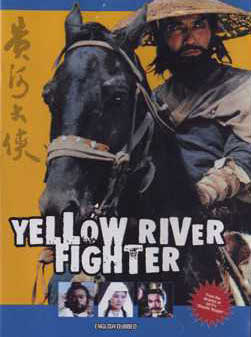
The YELLOW RIVER FIGHTER is a 1988 Mainland China
martial art yarn made by the director of Jet Li’s semi-classic film debut;
THE SHAOLIN TEMPLE. Starring in the lead however is not a young Jet Li like
Wu-shu ace but the veteran Wu-shu performer who played the fiendish villain
in the original Shaolin movie - tall lanky and limber Yu Cheng-wei who plays
a heroic swordsman in the film.
Around one thousand years ago China was divided
with ruthless warlords were competing between themselves, which brought considerable
suffering to the people. Because of the warring Master Swordsman Ma has tragically
lost his beloved young daughter and has become a despondent drunkard with
his misfortune being compounded by a sudden eye disease that has robbed him
of much of his sight. Fate has him cross the path of the Yellow River warlord
King Tuan however, whose life he save once and he finds new purpose by helping
the King bring peace to the land and the people of China. But Ma will have
to go through many other hardships and setbacks in seeking to achieve his
idealistic goal.
Made by Zhang Yin Yan of SHAOLIN TEMPLE movie fame, THE YELLOW-RIVER FIGHTER
has many of the same qualities and drawbacks as the earlier film. It has
undeniable production values with technical polish and delivers appealing
if superficial characters. It also contains many lively action scenes and
is shot among the gorgeous natural scenery in and around the picturesque
Yellow River. On the down side however, as is often the case with Mainland
productions, the film’s action scenes lack the edge and stylishness usually
found in a H-K production and has something of a shallow feel to it.
The YELLOW-RIVER FIGHTER’s leading star Yu Cheng-hui
had distinguished himself in the movies playing fiendish villains in both
SHAOLIN TEMPLE I and III (also known as MARTIAL ART OF SHAOLIN) with such
vivid portrayals that it might be difficult for fans to imagine him in a
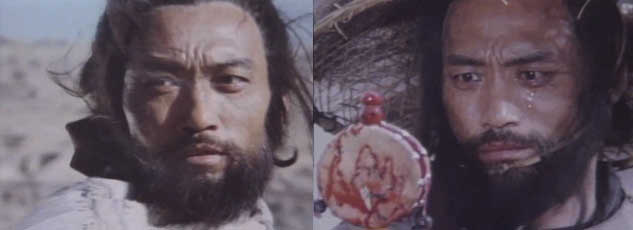
heroic lead role. But Yu actually proves himself superbly good here; he has
a powerful screen presence, brings a dignified, stoic, grimness to his part
and through his facial expressions powerfully demonstrates a variety of emotions
such as despair, joy, and anger. Unfortunately, a good deal of the appeal
brought by Yu is a bit undermined by the presence of a bratty comic sidekick
who follows him around through much of the film. He is intended as comedic
foil but comes across (at least in the dubbed English version of the film)
as a rather distracting annoyance although he does have a couple of good
moments.
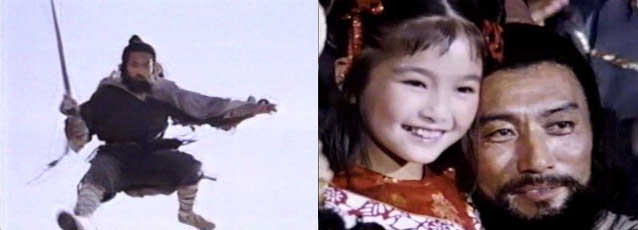
THE YELLOW RIVER FIGHTER is actually director Zhang Yin Yan’s favourite film
for personal reasons. “This is because my generation of intellectuals harboured
the aspiration of doing something for the people. Like my hero in the picture
– he suffers a lot of setbacks and has his life endangered - but he’s never
depressed and always works towards the notion of fighting for the people”.
Zhang refers to the so-called “lost generation”, young Chinese who lived
through the first couple of decades of Communist ruled China. They wanted
to help rebuild their country which had suffered decades worth of foreign
invasion and civil war but were faced with China ruler’s Mao Tse Dong’s ill
conceived socio-economic projects such as the “Great Leap Forward” which
resulted in around forty million deaths from famine or his infamous Cultural
revolution which saw as a result much of their hope and efforts dashed away.
The Cultural revolution and the disastrous effect of Mao’s absolute rule
are also a subtext found in some of the films of Zhang’s contemporary filmmaker
King Hu as well as more famously in the films of Hong Kong maverick director
Tsui Hark. While not as outlandishly visionary as Tsui , Zhang’s use of the
“Red China” subtext could be deemed as more direct and not quite as dark.
YELLOW RIVER does not only reflect a political subtext however; it also showed
the influence of many other movies. The more obvious would be the famed sixties
Japanese serial ZATOCHI who featured a righteous blind swordsman who defends
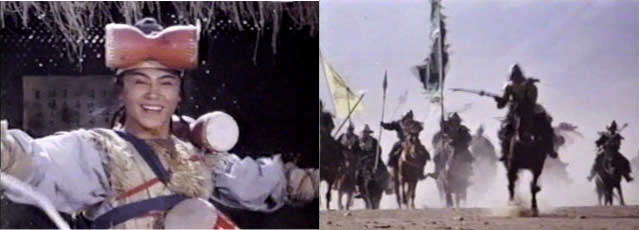
the oppressed and downtrodden. Judging from the many horse riding scenes
mounted by riders outfitted in ancient Chinese armour, we could also see
a possible influence from Akira Kurosawa’s late period epic: KAGUMUSHA (80)
and RAN (85). The cape and hat worn by the hero and much of the film’s scenery
is also slightly reminiscent of the outfits seen in some spaghetti Westerns.
All this borrowing, either real or alleged, makes the film sort of a throwback
to the sixties and seventies martial yarns but a pretty effective one.
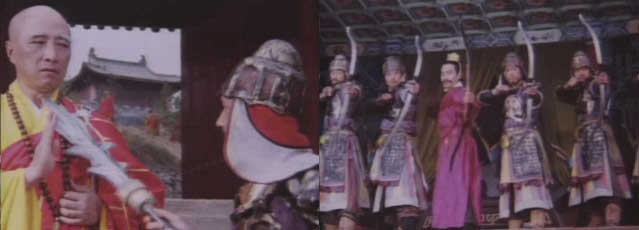
YELLOW RIVER FIGHTER features a couple of other SHAOLIN movie veterans albeit
usually in bit parts - thus Sun Jian-kua (who was the drunken pole
fighting monk in SHAOLIN TEMPLE and the cross eyed villain in KIDS FROM SHAOLIN)
appears as a henchman here. Woo Gim-keung also shows up, as does Yui Hai
who appears for about two minutes in his customary monk role. He does not
fight here, but was along with Yu Cheng Hui the film’s action choreographer.
This was to be Yu Cheng- Hui and Woo Gim-keung’s last recorded appearance,
which is a shame because the film truly shows that the former had the right
stuff for elder leading man heroics.
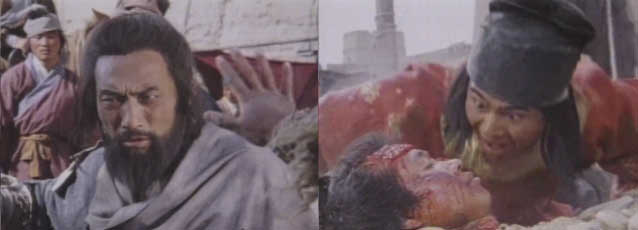
Interestingly enough YELLOW RIVER FIGHTER features a surprising amount of
graphic violence with highlights of a couple of decapitation scenes, a little
girl being speared in the back and heads and corpses being left hanging on
city walls. Still thankfully these moments are brief and not overtly gory.
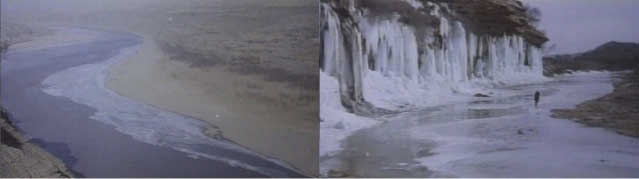
The setting of much of the film is the area near
the Yellow River, one of China’s two major rivers (the other one being the
Yangtze which means the “Blue River” in Chinese). It’s the region between
these two rivers in which much of Chinese civilisation developed. The Yellow
River has such a name because of the yellowish deposits it carries which
are left on the riverbanks making them very fertile for cultivation. Like
the Yangtze however, the Yellow River is a capricious powerful river dangerous
to navigate in some areas.
Overall, YELLOW RIVER is not a masterpiece, but remains a very decent throwback
yarn. It does not really compare to the best martial films of the Shaws,
Sammo or Jackie for example, but with it’s Yellow River related scenery and
its older yet vigorous hero it has the great virtue of being different from
the norm. Therefore, the movie is mostly recommended for those who would
like some small undemanding variety in their martial art movie diet.
YELLOW RIVER is currently available in two different
DVD formats, neither of which is fully satisfactory. There is a full screen
dubbed one from Crash Cinema. The other one by CAV/WRLD VIDEO is letterboxed
and subtitled but has the annoying glitch of pausing by itself at each chapter.
My rating for the film: 7.0