Cinema HK: Documentary Series
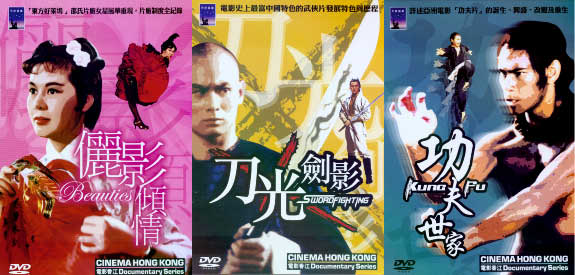
Celestial has produced three documentaries
that cover certain aspects of Hong Kong film with a general focus on the
Shaw Brothers. They are titled “Beauties”, “Swordfighting” and “Kung Fu”
and are interesting for what they are, but also lost opportunities for what
they could have been. All three run in the 50-minute range and are an assortment
of film clips, interviews, pictures and a few behind the scenes shots. They
are somewhat informative to those coming in without much knowledge on the
subjects, but won’t add a lot to those that have a fair amount of background
already. Even so, it's fun to simply watch it for the pictures.
All three tend to come across partly as advertisements for other Shaw films
and a promo for Celestial and perhaps most egregious is the amount of time
spent on the set of Lau Kar-leung’s recent film ‘Drunken Monkey” which just
happens to have been co-produced by Celestial and the Shaw Brothers. The
DVDs come with two audio tracks – Mandarin and English – which is a bit annoying
because if you choose the Mandarin track the interviews often conducted in
Cantonese are voiced over in Mandarin – so its almost better taking the English
option since the interviews are not voiced over.
Here is just a little information on what
the three films contain.
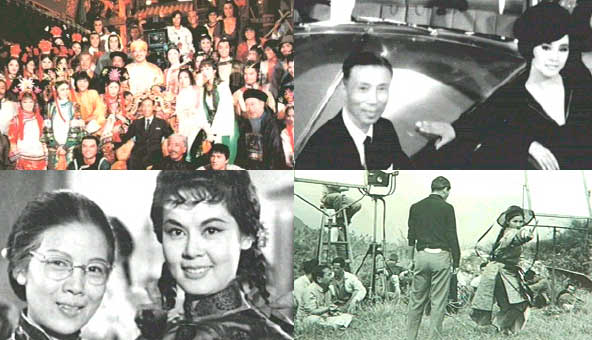
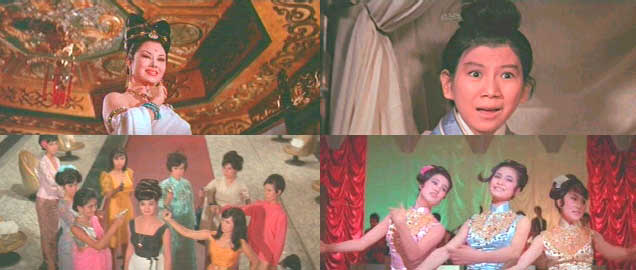
“Beauties” (51 minutes)
This was the documentary I was looking forward
to the most, but it turned out to be the weakest of the three. It focuses
on the female actresses that worked for the Shaw’s, but for the most part
skips by very superficially on just a few of them. I would really have loved
an in depth look at their lives and careers and for the film to touch on
many of the lesser-known actresses.
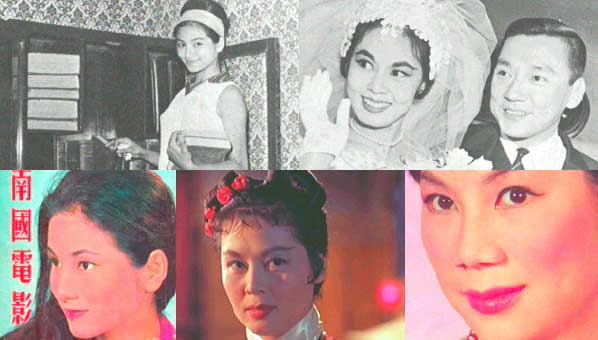
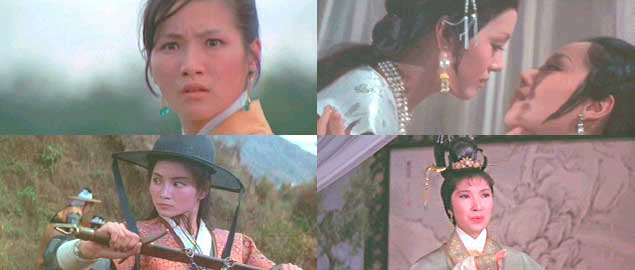
Instead, they focus on the big five with a few minutes devoted to some of
the erotic actresses – the film genre known as “Wind Moon” films. The big
five are: Li Lihua, Linda Lin Dai, Ivy Ling Po, Cheng Pei Pei and Lily Ho
and some biographical information is supplied and a number of clips from
their films are shown. I have no argument with these five being the main
focus, but where are Betty Loh Ti, Chin Ping, Jenny Hu, Lily Li and Li Ching.
And it would have been wonderful if they had at least spent some time with
actresses like Chen Ping, Helen Ma, Betty Ting Pei, Angela Yu and Tina Chin
Fei. These actresses may not have been big stars, but they certainly were
beauties and they often gave their films so much delightful sizzle.
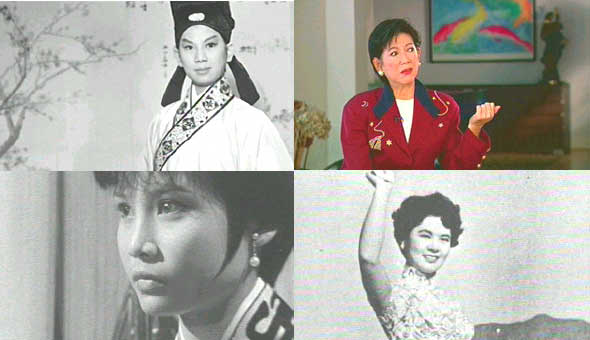
The only actresses interviewed were Ivy Ling Po, Cheng Pei-pei, Yum Yum Shaw
and Tanny Tien Ni as most of the others are deceased. Ivy still looks great
and told about how difficult it was to work for Run Run Shaw. Even after
she had become a big star with “Love Eterne”, he tried to control her life
and when she and Chin Han decided to get married Run Run did what he could
to dissuade them of this because he feared she would lose her popularity
if she were a married woman. They ignored him and got married anyways and
had to face the wrath of the bosses.
The clips chosen are fine – many from Yellow Plum operas along with “Come
Drink with Me”, “Angel with Iron Fists”, “Hong Kong Nocturne” and “Intimate
Confessions of a Chinese Courtesan” (which it gives credit for opening up
Hong Kong films to more racy content). My favorite shot - a very short one
– is a clip of Lily Ho and Jenny Hu sitting down to lunch with Run Run Shaw
and I wished they had more of these types of clips as opposed to ones from
the films. Somebody needs to do this subject right.
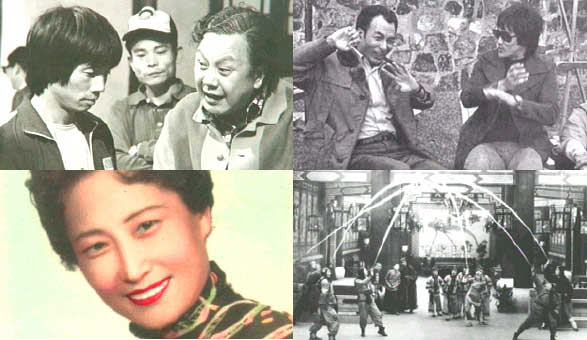
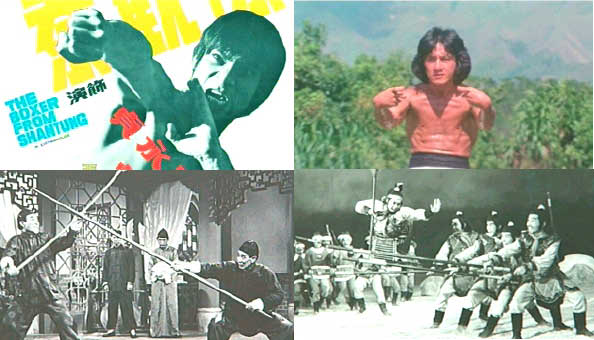
“Swordfighting” (50 minutes)
This is a decent primer in the history of
wuxia films that happily goes beyond only discussing the Shaw period. In
fact, it starts with the early wuxia films – “The Burning of the Red
Lotus Temple” in 1928 – and it shows some great clips from some of these
early films with a special emphasis on Chin Tsi-ang – the first female film
martial artist and of course Sammo’s grandmother. She is still alive – last
seen in “In the Mood for Love” I believe – and they show her practicing her
forms at 93-years old!
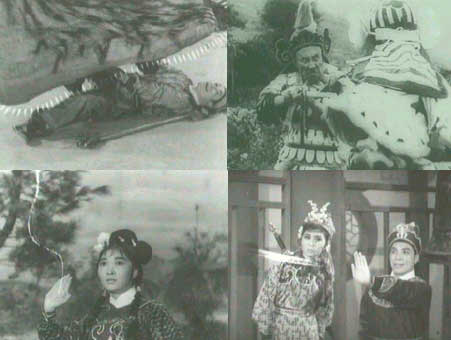
Some of these early clips show how they achieved special effects in those
films and the wonder Buddha Palm power and the giant eagles that saved the
day (ala Kung Fu Hustle!). The film also traces the history of martial arts
jumping – from the early days when they simply played the film backwards
to give the illusion of jumping high when in fact the person was actually
jumping down to the use of trampolines and finally wires.
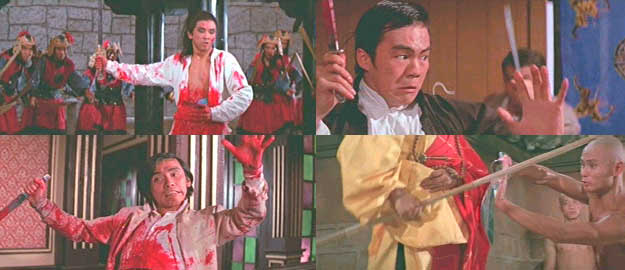
This film is not star focused – but much more director oriented as
it discusses the masters of this genre – King Hu (and his influences of Beijing
Opera and Japanese samurai films), Chang Cheh (and the escalation of violence
and male bonding in his films) and the elegance of the films of Chor Yuen.
Many clips are shown of their films.
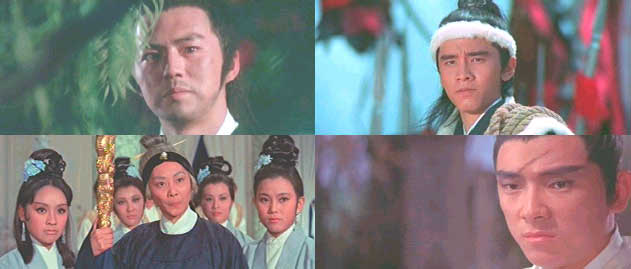
The subject of weapons is also delved into with Lau Kar-leung giving a demonstration
in some of them and it discusses how the films evolved from the 18 weapons
generally considered to be part of Chinese folk lore (and all used in “Legendary
Weapons of China”) to having to come up with new visually exciting weapons
such as the flying guillotine. Fights also evolved from fairly tame one on
one/few action set pieces to the audiences love for the mass killing scenes
in which the hero took on hundreds of bad guys and slew them all as in “The
New One-Armed Swordsman” and “Golden Swallow”. Of the clips shown,
the most interesting for me were the ones of “The Fourteen Amazons” – a film
not yet released by Celestial.
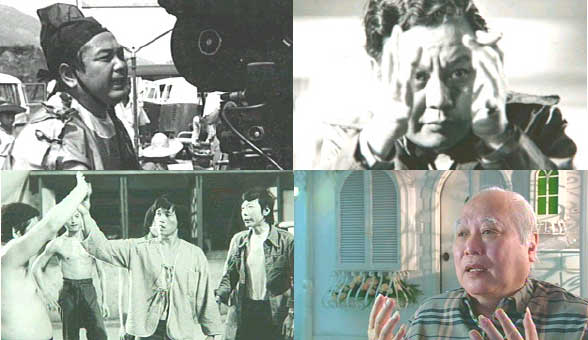
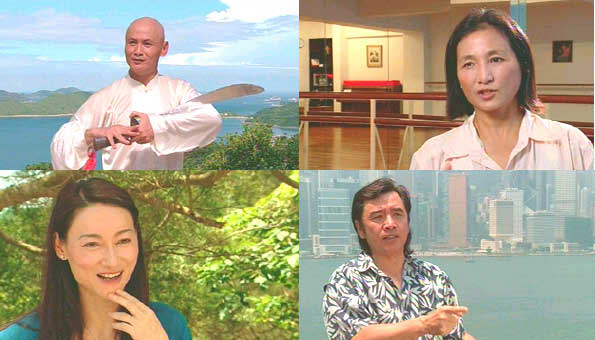
Some of the people interviewed were: John Woo, Sammo Hung, Cheng Pei Pei,
Lau Kar-leung, David Chang, Chor Yuen, Kara Hui Ying-hung and Gordon Lui.
Even though Ti Lung is in many of the clips he is not interviewed. The interviews
- as in all three films - are fairly short.
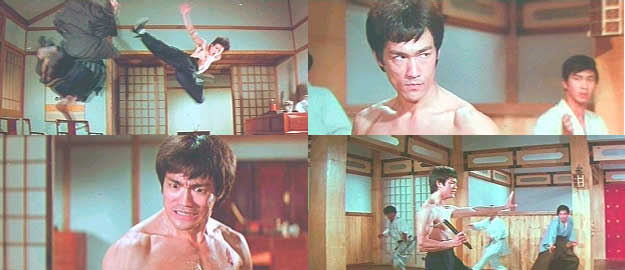
“Kung Fu” (47-minutes)
This takes up where “Swordfighting” left
off. By the beginning of the 1970’s wuxia films were somewhat played out
and hand to hand combat or kung fu took over the screen. The film digresses
backwards in film history to show that the roots of kung fu began primarily
with the Wong Fei-hung films starring Kwan Tak-hing and they dispaly some
great clips of his films – still very difficult to get with English subs.
According to Sek Kin who often played Wong Fei-hung’s main nemesis in these
films, it was basically the actors figuring out their own moves with most
of them having little experience in martial arts but instead in Chinese opera.
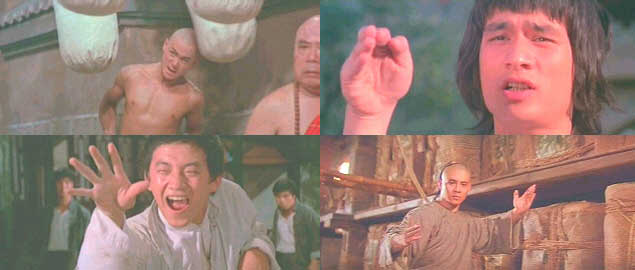
In the 1960’s they began using action choreographers who had martial arts
backgrounds such as Lau Kar-leung. Initially the films were often intricately
choreographed with little contact, but this all changed with the “new realism”
that Bruce Lee brought into his films – the fights were brief and violent
in the manner of kung fu in the real world. For the most part, the documentary
focuses on Gordon Liu, Bruce, Jackie Chan and Fu Sheng with brief clips of
a number of their films. The final phase of kung fu that they cover is the
advent of the kung fu comedy best exemplified by “Spiritual Boxer” and “Dirty
Ho”.
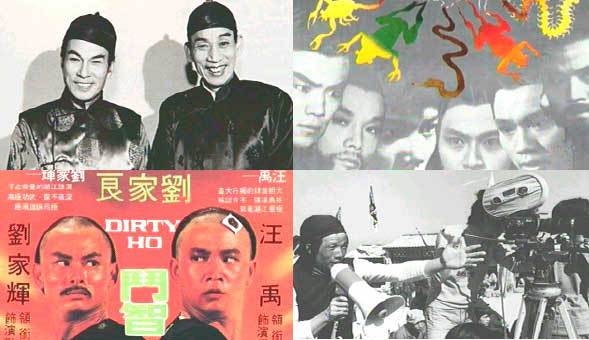
Being interviewed: Jackie Chan, Jet Li, Sammo Hung, Sek Kin, Chor Yuen, Gordon
Liu and Kara (I am not sure when the interview was done but she sure looks
great at the time and is very personable). This felt a bit shortchanged
overall with its short running time and though it covers a lot very briefly
it could easily have gone into much more depth about the background of the
actors as well as covering a lot more films.