Passion
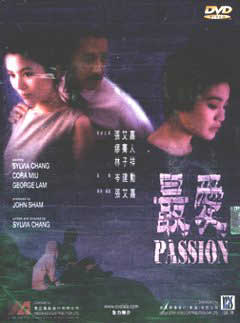
Review by YTSL
Although I consider myself more of a humanist
than an outright feminist, it does please me to see as many talented women
as there are having a significant presence in the Hong Kong movie world.
Among their number is someone who has produced her share of impressive works
in front of the camera (notably in “Queen of Temple Street”, “Full Moon in
New York” and “Shanghai Blues”) but also behind it (she helmed and has scriptwriting
credits for such as “Tempting Heart” and “Mary from Beijing”). The
broad extent along with true depth of Sylvia Chang’s talent can be discerned
-- but still not fully grasped -- upon learning that this married mother
has additionally served as a film producer, been managing director of a cable-television
network aimed at the youth market in her native Taiwan as well as a TV presenter,
and is a multiple platinum album-selling singer (Among her hits are the wonderfully
pleasant end song of “Three Summers”, a quietly moving coming-of-age drama
which she also executive produced).
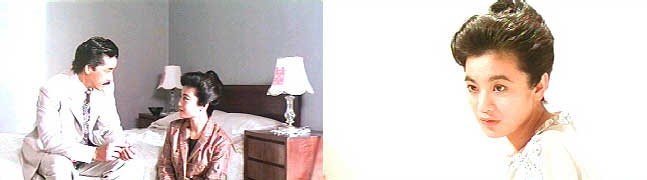 PASSION is a 1986 D&B production that is very
much Sylvia Chang’s show on account of her being its director, scriptwriter
and lead actress. In this understated but involving drama, which gets
more and more gripping the further along we get into it, she appears on-screen
as Wendy Cheung, a woman who the film’s audience first encounters as a middle-aged
matron in the company of an obviously close friend of hers (Cora Miao has
the supporting role of Ku Ming). All seems well as we are briefly introduced
to their daughters -- plus a well-mannered boyfriend of one of the young
lasses -- and the two older ladies settle down to have a pot of tea while
the teenaged trio go off to play tennis. The mood remains light upon
the movie flashing back to the engagement party of a younger-looking Ming
and David Lam (George Lam endows his character with the air of a pillar of
the establishment). Onto that happy scene walks in Wendy, who we learn
is the best friend from childhood, just returned from (studying?) abroad,
of the former secretary now officially engaged to the lawyer who used to
be her boss.
PASSION is a 1986 D&B production that is very
much Sylvia Chang’s show on account of her being its director, scriptwriter
and lead actress. In this understated but involving drama, which gets
more and more gripping the further along we get into it, she appears on-screen
as Wendy Cheung, a woman who the film’s audience first encounters as a middle-aged
matron in the company of an obviously close friend of hers (Cora Miao has
the supporting role of Ku Ming). All seems well as we are briefly introduced
to their daughters -- plus a well-mannered boyfriend of one of the young
lasses -- and the two older ladies settle down to have a pot of tea while
the teenaged trio go off to play tennis. The mood remains light upon
the movie flashing back to the engagement party of a younger-looking Ming
and David Lam (George Lam endows his character with the air of a pillar of
the establishment). Onto that happy scene walks in Wendy, who we learn
is the best friend from childhood, just returned from (studying?) abroad,
of the former secretary now officially engaged to the lawyer who used to
be her boss.
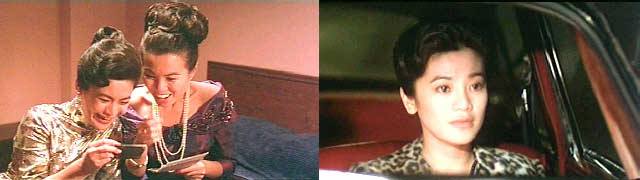
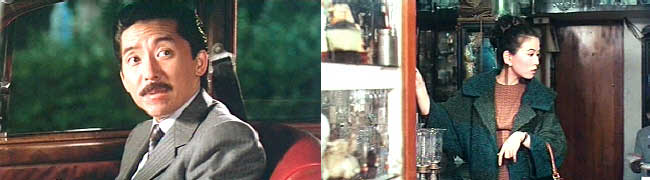 Watching Ming and Wendy together, I luxuriated for
a while in the warmth of the picture being painted of two long-time female
friends enjoying each other’s company (that one seems to more infrequently
come across in Hollywood than Hong Kong works). Alarm bells started
to ring in my head though upon it becoming evident that not only Ming but
her fiancé as well appeared to have better rapport with Wendy than
each other. Around this time, my view of Ming and Wendy’s relationship
as resembling that of the bosom buddies portrayed by Brigitte Lin and Maggie
Cheung in “Red Dust” got replaced by my retrospectively remembering there
having been discussions -- between Sylvia Chang and Hong Kong movie reporters
-- of their foreshadowing that of the rivals in love essayed by Gigi Leung
and Karen Mok in her 1999 “Tempting Heart”.
Watching Ming and Wendy together, I luxuriated for
a while in the warmth of the picture being painted of two long-time female
friends enjoying each other’s company (that one seems to more infrequently
come across in Hollywood than Hong Kong works). Alarm bells started
to ring in my head though upon it becoming evident that not only Ming but
her fiancé as well appeared to have better rapport with Wendy than
each other. Around this time, my view of Ming and Wendy’s relationship
as resembling that of the bosom buddies portrayed by Brigitte Lin and Maggie
Cheung in “Red Dust” got replaced by my retrospectively remembering there
having been discussions -- between Sylvia Chang and Hong Kong movie reporters
-- of their foreshadowing that of the rivals in love essayed by Gigi Leung
and Karen Mok in her 1999 “Tempting Heart”.
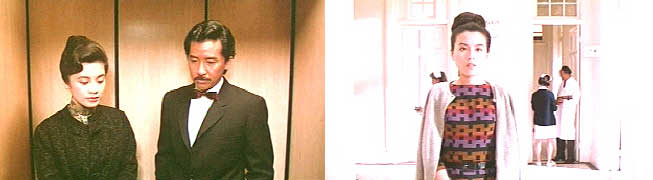
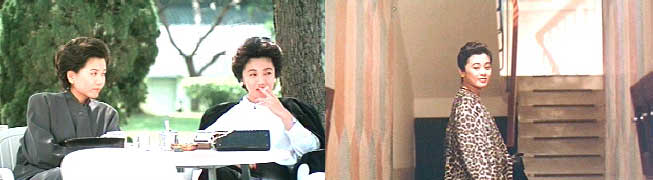
This sense of foreboding gets alleviated to some extent when PASSION cuts
back to the decades later “present” in which the daughter of the now widowed
Ming -- who is heard being addressed as Mrs. Lam -- has Wendy as her godmother
(and, presumably, Ming has a similar relationship with the daughter of “Mrs.
King”). However, the tension starts to mount anew when the two Society
types opted to follow up their tea and cigarettes with a bottle of champagne
(on account of it being a Hong Kong movie convention of sorts for women to
open up and frankly disclose their feelings after imbibing generous amounts
of alcohol!). And soon enough, about one-third into the film, one of
them is heard asking the other: “Have you ever loved your best friend’s
boyfriend?”
 At this juncture, it ought to be noted that PASSION
is: Less a work that focuses on certain individuals feeling passion
(or not); and more that which looks at how people deal with whatever “natural”,
“right” or “wrong” emotions they have towards others (along with what they
feel obliged to consider when trying to decide what moves they will make).
In the process of exploring this, some understanding may be gained for how
and why it is that despite there being truth in the view that “to love and
be loved is very sad”, so many of us still continue to get tempted to --
and often do -- give in to the strong desires that can be developed for another
human being. Once more then, Sylvia Chang has done it again:
That is, paint realistic yet sympathetic portraits of persons with opposing
viewpoints, and commingle as well as situate them in a quality piece of work
that speaks to the heart yet brims with quiet intelligence.
At this juncture, it ought to be noted that PASSION
is: Less a work that focuses on certain individuals feeling passion
(or not); and more that which looks at how people deal with whatever “natural”,
“right” or “wrong” emotions they have towards others (along with what they
feel obliged to consider when trying to decide what moves they will make).
In the process of exploring this, some understanding may be gained for how
and why it is that despite there being truth in the view that “to love and
be loved is very sad”, so many of us still continue to get tempted to --
and often do -- give in to the strong desires that can be developed for another
human being. Once more then, Sylvia Chang has done it again:
That is, paint realistic yet sympathetic portraits of persons with opposing
viewpoints, and commingle as well as situate them in a quality piece of work
that speaks to the heart yet brims with quiet intelligence.
My rating for this film: 8.
N.B. Sylvia Chang won the HKFA and Golden Horse
Best Actress awards for her performance in PASSION. Cora Miao also received
a Golden Horse award for Best Supporting Actress, and George Lam -- together
with Lowell Lo -- won a HKFA Best Original Film Score award.