The Longest Summer
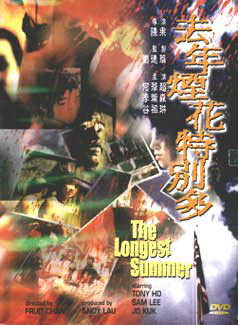
Reviewed by YTSL
On July 1st 1997, Hong Kong was handed back over
to China by the British. Three months before the actual official Handover
was enacted, the Hong Kong Military Service Corps -- which had been in existence
for 140 years -- was disbanded. Former soldiers found themselves having
to come to terms with being civilians in an economic battlefield of a world,
full of people who only felt certain about it being one which was changing
and replete with complicated folks convinced that money was what was needed
to keep on going plus help them feel more psychologically secure as well
as physically comfortable. Feeling abandoned as well as betrayed by
their colonial masters (to whom they had pledged allegiance and to fight
others for, if necessary), many of them struggled to cope in times when being
honorable was much less valued than the ability to make "fast money" (even
by their parents, who had previously taught them otherwise).
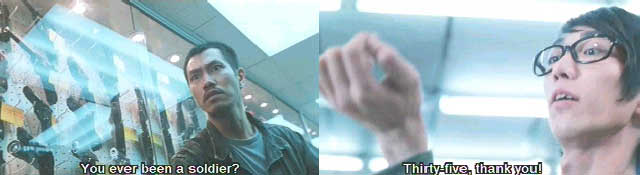
The story of one such individual -- a former army sergeant named Ga Yin (who
is portrayed by Tony Ho) -- is at the center of THE LONGEST SUMMER, director
and scriptwriter Fruit Chan's 1998 film. Bar for that which makes up
a short postscript of sorts, all the real-life plus fictitious events that
get covered in this incredibly wide-ranging work -- much of which nevertheless
either directly or indirectly involve the movie's quietly desperate and despairing
main character, four of his (ex-)military buddies (whose monikers are Bobby,
Gary, Wai and Pang), his skinny younger brother (Ga Suen -- AKA "Chopstick"
-- is played by Sam Lee) and/or a young woman whose path criss-crosses with
his and the others in unanticipated ways (Jo Kuk made her big screen debut
here as Jane) -- are stated in intertitles to have occurred between 3rd April
and 25th September 1997.
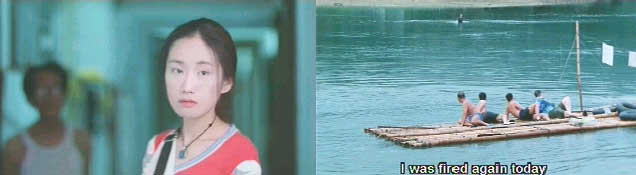
THE LONGEST SUMMER starts off with some rather novel -- including in terms
of their not commonly featuring in Hong Kong movies -- imagery that is accompanied
by a combination of English language voice-over, the singing of "Auld Lang
Syne" and sounds that do not constitute words. Throughout, certain
almost surreal recurring elements -- particularly with regards to gaggles
of misbehaving schoolgirls -- plus truly interesting documentary-style footage
-- which captured for posterity such as the People's Liberation Army's troop
movement through Hong Kong streets along with the fireworks displays that
commemorated the official opening of the Tsing Ma suspension bridge as well
as the formal Handover ceremony -- make appearances in that whose Chinese
title literally translates into English as "Lots of Fireworks Last Year"(!).
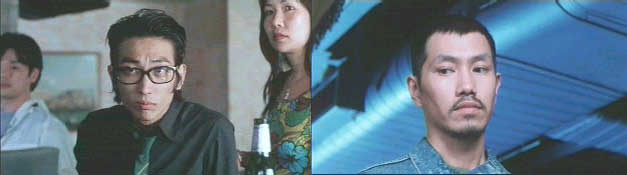
In general though, much of this Andy Lau executive produced film's first
hour seemed to move along fairly conventional lines; not least with Ga Yin
being shown doing such as acquiring Underworld connections via his Triad
brother. Even the ex-soldier's decision -- along with four of his similarly
impoverished comrades as well as the younger sibling who his ultra-pragmatic
father had urged him to learn from -- to come by a large amount of cash by
way of robbing a bank (which, following the stipulation of one particularly
embittered man, had to be a British one) was not one which looked like it
was going to necessarily lead THE LONGEST SUMMER down a particularly extraordinary
route. However, as it turned out, this post-modern appearing offering's
second hour most certainly does end up going in diverse and often not very
predictable -- plus some actually downright hard to follow -- directions.
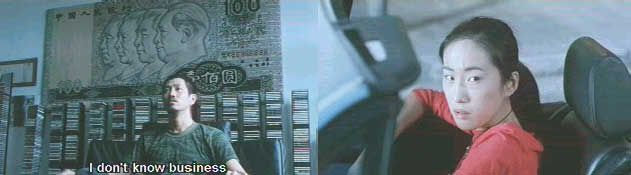
For the most part, I respect -- and wished to be receptive to -- what Fruit
Chan sought to majorly do with the undeniably thought-provoking THE LONGEST
SUMMER: I.e., make certain insightful plus topical comments about Hong
Kong, and its inhabitants, in the period surrounding the historic Handover;
an event about which many Hong Kongers -- who didn't feel British yet also
not 100% Chinese (and most certainly not Communist) -- had quite a few trepidations
(not least after the events that occured in Tiananmen Square in the summer
of 1989). Nevertheless, I can't help thinking that the auteur made
the mis-step of trying to cover too much ground in what was, after all, only
the third effort that he helmed, and thereby ended up with a too disjointed
cinematic piece that hits some targets -- and even a smattering of bulls-eyes
-- but also missed a few others (which it ought not have also given attention
to and thus been distracted by).
My rating for this film: 7.