Just One Look
Director: Riley Yip
Year: 2002
Rating: 8.0/8.5
Some memories should be kept in an airtight box
so that they never grow old and decay. This sweetly nostalgic coming of age
film is full of them. In these hardened times in which there appears to be
so little magic left, director/scriptwriter Riley Yip (Metade Fumaca, Love
is Not a Game) seems to be yearning for the days when innocence was still
cherished, when hearts were still pure, when first love tasted so sweet,
when days seemed to run on forever, when the sugar cane was fresh, when a
brassiere hanging on a clothes line created wonder, when the glimpse of a
girl with an umbrella could change your life.
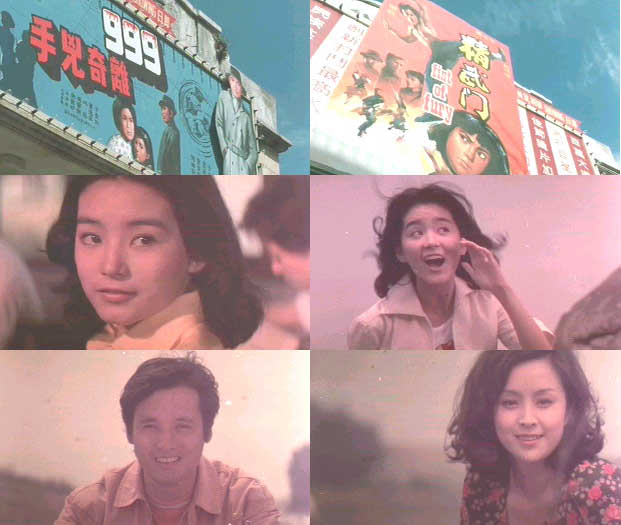
This was also when film mattered – when life in a small place like Cheung
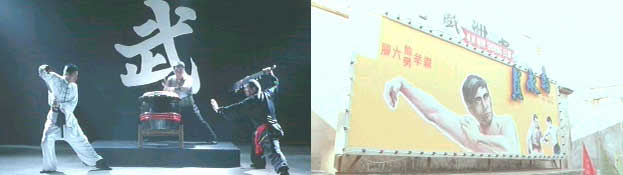
Chau could be measured by the changing movie posters at the local cinema;
when every boy imagined himself a kung fu hero and learned the latest fighting
styles from films like “Boxer of Shantung” and every girl pictured herself
being kissed like Brigitte Lin in the latest weepie from Taiwan. This loving
valentine to those long gone days and to Hong Kong film is by turns comical,
touching, tender, wistful and surprisingly poignant at times. On a simple
level the film is about first love and growing up, but at the same time it
speaks to all of us about family, forgiveness, friendship, devotion, redemption,
death and continuation. By the end of the film the world is beginning to
change, the innocent times are slowly eroding, but a dreamy mirage like cameo
at the end seems to suggest that there is still a whole universe of exploration
and experience to look forward to.

At a film showing of one of the “Dial 999" series of murder mysteries
starring Walter Cho-Tat-wah, Sam Lee (who's character is also named Cho Tat-wah)
leaves his son to go to the bathroom and dies of a gun shot in there. Since
Sam was a cop deeply in debt, everyone puts it down to suicide but his son
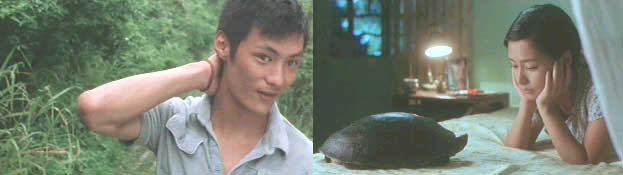
Fan (played by the kid in Three’s Going Home segment as a boy and by Shawn
Yu as a teenager) feels sure that he was killed by the local gang head, named
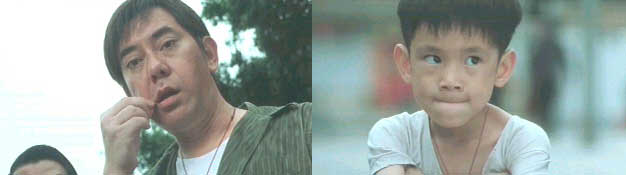
Crazy (Anthony Wong). As he grows up this gnaws at him and he gets his occasional
revenge by surreptitiously attacking Wong with a slingshot – and the bumps
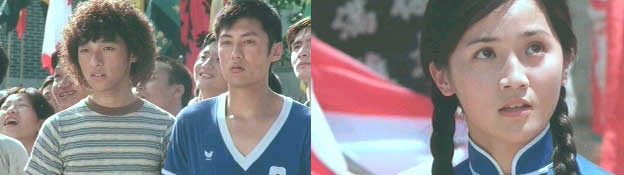
on Wong’s head humorously increase over the years. Fan and his friend Fish
Ball (Wong You Nam) sell concessions in front of the movie theater – sugar
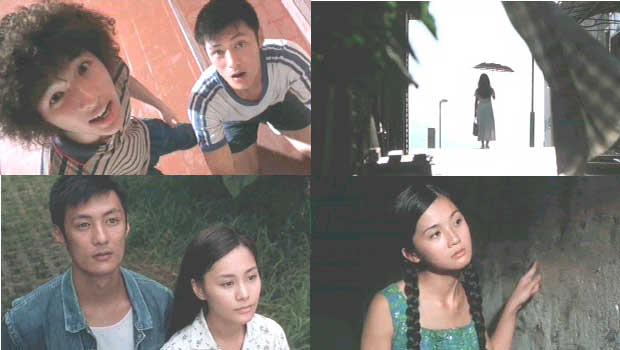
cane and fish balls – and talk about movies, rats and women. Soon two girls
come into their lives that send that first heady flush of new love rushing
through their numb bodies. The Twins!
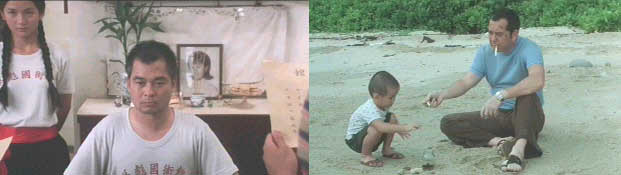
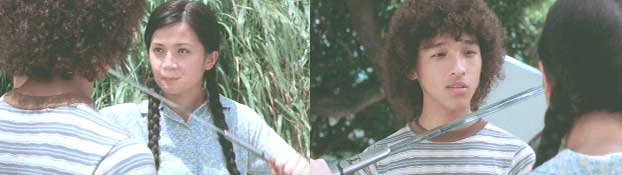
Fish Ball falls hard for the daughter (Charlene Choi) of the sifu of the
local kung fu school (Eric Kot) and he and Fan both enroll there (there are
five rules – the fifth being “pay promptly”!). Kot teaches the Hung Gar style
and rails contemptuously against the phony kung fu movies where the kids
learn movie fighting, not real fighting. Charlene though takes a liking to
Fan – but he has his heart captured by the image of a girl in the distance
in a floral dress and a raised umbrella on a sunny day. This is Gillian Chung
and she lives on an even smaller island where she was raised in a nunnery
and assists the nuns at funerals (that’s her as a little girl at the film’s
beginning – watching “Buddha’s Palm” on the TV set). Her innocence and isolation
is reflected in her every look, her shy smile, her wrinkled nose – even in
her choice of companionship – a turtle. Even with his newfound feelings,
Fan still feels the need to revenge himself for his father’s death on Wong
(whose favorite threat is “I’ll cut off your balls or my name is not Crazy”)
and finally challenges him to a duel to be fought under the full moon. The
last fifteen minutes of the film turns into pure lyrical magic – moments
of wonder, sadness, hope and understanding.
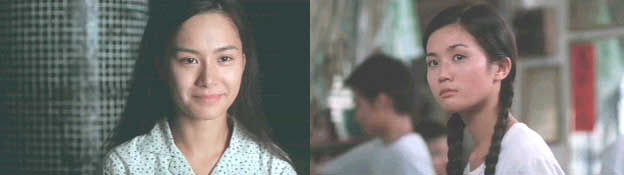
This is a beautifully realized film in which there isn’t really a wasted
shot. Its slow measured pace perfectly reflects the time and place, the numerous
threads of the film all tie up in a meaningful and telling way by the end,
the cinematography is clean and bright and it creates various incandescent
moods that subtlety shift throughout the film. Overlaying it all is a love
for film – particularly Hong Kong film and this infuses the story with a
warm nostalgic glow. This love is evidenced everywhere – the gigantic bold
posters, the black and white photos of actors on the wall, the parody of
Touch of Zen, the touching scene when Kot buys two tickets to the latest
film, the love letters written from film blurbs and the snippets of films
showing Bruce Lee, Nora Miao, Charlie Chin, Patrick Tse, Cho Tat-wah, Brigitte
Lin and others from long ago. For any lover of Hong Kong film, watching
this is like a warm sudsy satisfying bath.
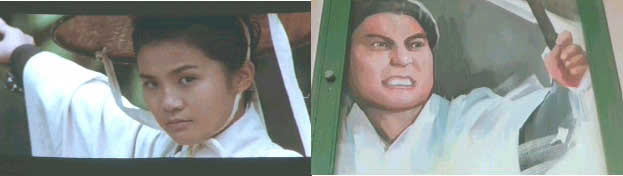
The performances from the two male leads are fairly good (compare Wong You
Nam here to his role in Hollywood Hong Kong to see how good he is – he is
also a member of the band Shine) and get better as the film progresses
- they seem to grow as their characters do. The Twins take a bit of a back
seat here to their male counterparts, but both generate some sort of mysterious
star power ever so quietly – and every expression and movement seem so right
for their parts and endear themselves to the audience. Charlene as the kung
fu heroine has the flashier part, but Gillian’s simplicity felt somehow deeper.
Anthony Wong as usual nearly steals the show in one small scene on the beach
when he gently talks to his small son about his hopes for him in the future.
And like it seems in every coming of age film, this one has it’s share of
memory inducing tunes from a Sam Hui song to the Twin’s lilting version of
the Bee Gee’s Melody Fair that will be rocketing around your head for days
afterwards.
My rating for this film: 8.0
If you want to be surprised by the cameo
at the end, don't - click here
Reviewed by YTSL
Like with some favorite food and drinks, certain
movies can leave the imbiber of them with a delicious after-taste to treasure
almost as much as the actual partaking of them. The way that an outstanding
culinary experience can be for gourmands, these welcome cinematic treats for
the eyes, ears, heart and soul are apt to linger on long in one’s memory for
some time after they have been consumed. As far as I am concerned, JUST
ONE LOOK is one such film.
One measure of the strength of this nostalgia drenched 2002 offering’s sensory
plus emotional impact on this (re)viewer is it being so that, after she viewed
it for the first time, at least two nights’ worth of her sleep got filled
with imagery that were either from or clearly inspired by this majorly evocative
Riley Yip directed plus scripted effort. Another stems from the Twins’
rendition of the Bee Gees’ “Melody Fair” coming to haunt me -- and in a not
at all horrendous way! – for much larger portions of my waking hours than
one might have expected of a tune that actually gets played far less frequently
in JUST ONE LOOK than, say, “California Dreaming” (or “What a Difference
a Day Makes”) in “Chungking Express”.
Additionally, like with “Metade Fumaca” (whose helmer also was Riley Yip),
certain sections of JUST ONE LOOK had this non-native Hong Konger not only
yearning to pay another visit to the HKSAR but also having the kind of favorable
feelings towards that section of East Asia which seem to emanate from the
sort of attachment to the “Fragrant Harbor” that one might ordinarily assume
would or could only be possessed by those who call it home. From one
perspective, this is in and of itself a sure sign of this work – which is
largely set in circa 1970s Cheung Chau --containing a close to magical quality.
Upon thinking a bit more re how and why this is though, I have concluded
that what undoubtedly contributes to that which could be primarily described
as a “Coming of Age” film’s being able to bring about such a reaction is
its having as its protagonists individuals who – for all of their living
in a different place and time from those with which I am most familiar --
share with such as me an undoubted love for Hong Kong and other cinema as
well as their home territory and certain key figures in their lives who also
reside(d) there.
Among the more alluring attributes of Hong Kong movies for this fan of these
works are those which make for their creating a sometimes seemingly very
real reel world for a transnational and far flung community. JUST ONE
LOOK contributes its share of appealing characters, sweet touches, nicely
realized details and other attractive elements to this reel-ity. At
the same time, that which provides four of Hong Kong’s most youthful plus
“hottest” Idols with plenty of opportunities to shine also delightfully acknowledges
that more than a small amount of pleasure and inspiration continues to be
derivable from the efforts of many an older (or even now sadly deceased)
silver screen luminary, and generously accords some space to older thespians
who surely still have many contributions to make before they finally do decide
to call it a day (including Sam Lee – who was probably playing a father for
the first time in his acting career here! -- and Jo Kuk as well as the decades
older Lee Fung, Joe Cheung, Anthony Wong and Eric Kot).
My rating for this film: 8.5